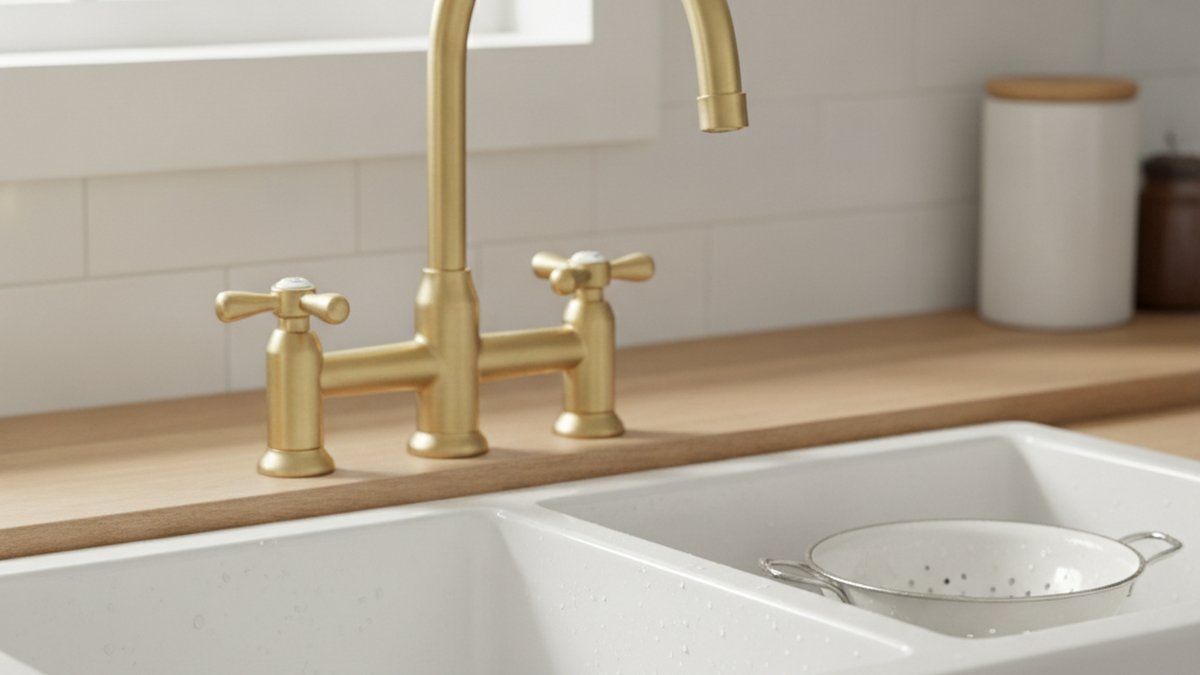
A kitchen faucet vintage style is a faucet designed to look like the classic bridge, gooseneck, and cross-handle taps of the early-to-mid 1900s, but built with modern internals — ceramic-disc cartridges, braided supply lines, and lead-free brass bodies. In plain terms: it looks old, works new. If you’re renovating a farmhouse kitchen, styling a cottage or craftsman home, or just tired of the same glossy chrome everyone else has, this is the category you’re shopping. Below, we’ll answer the real questions people actually ask before buying one — what “vintage” actually means, which finish holds up, what it costs, and how to make sure it fits your sink.
What actually makes a kitchen faucet “vintage style”?
A faucet earns the “vintage style” label through four design cues: a bridge or high-arc gooseneck body, cross or lever handles (not a single modern paddle), a warm metallic finish like brass or bronze, and exposed, mechanical-looking details such as a visible bridge tube, a telephone-style pull-down spray, or a porcelain lever insert marked “Hot” and “Cold.” Everything else is preference.
The key thing to understand is that “vintage” today is almost always a look, not literal old plumbing. A genuine antique faucet from 1935 used rubber washers that wear out and rush-hour water hammer that rattles your pipes. A modern vintage-style faucet from a brand like Cobbe hides a ceramic-disc valve rated for hundreds of thousands of open-close cycles inside a body shaped like grandma’s. That’s the whole appeal — and it’s why buying “reproduction vintage” beats hunting for a true salvaged antique in almost every practical case.
If you want the deeper background on whether the antique route ever makes sense, we go into it in detail in our guide on whether a vintage kitchen faucet is worth it and how to choose one that actually works. For most buyers, the short answer is: buy a modern reproduction.
Which vintage faucet style is best — bridge, gooseneck, or pot filler?
For most kitchens, a gooseneck (high-arc) faucet with cross handles is the best all-around vintage style because it clears tall pots, fits a standard single-hole or three-hole sink, and reads clearly “vintage” without the extra plumbing a bridge faucet demands. Choose a bridge faucet if you have a wide three-hole sink and want the most authentic look; choose a pot filler only as a wall-mounted extra near the stove, never as your main tap.
Here’s how the main vintage silhouettes compare:
| Style | Best for | Vintage look | Install notes | Typical price |
|---|---|---|---|---|
| Gooseneck / high-arc | Everyday kitchens, deep sinks | Strong | Fits 1 or 3 holes | $120–$300 |
| Bridge faucet | Wide farmhouse/apron sinks | Most authentic | Needs 2–3 holes, exposed tube | $180–$550 |
| Pull-down with cross handle | Function-first buyers | Moderate | Single hole, easy install | $110–$280 |
| Wall-mount / pot filler | Secondary tap by stove | Industrial-vintage | Needs in-wall plumbing | $150–$400 |
A quick reality check on bridge faucets: that beautiful exposed tube connecting the two handles is also a dust and grease magnet, and it takes an extra 20–30 minutes to install because you’re hooking up two separate valves. Gorgeous, but know what you’re signing up for.
Do vintage-style pull-down faucets exist, or do you lose the sprayer?
Yes — you can absolutely get a vintage look with a modern pull-down or pull-out sprayer. Manufacturers now build the spray head into a gooseneck body and disguise the docking magnet, so you keep the retractable sprayer you actually use daily while the faucet still reads classic. If a pull-down spray head is a must-have for you, look for one with a brass or metal-weighted hose and a magnetic dock, and check that the spray face can be wiped clean of the hard-water buildup that plagues aerators.
What finish should you pick for a vintage kitchen faucet?
For a vintage kitchen faucet, the three finishes that actually look period-correct are brushed/antique brass, oil-rubbed bronze, and polished nickel — in that order of popularity for 2026. Skip bright chrome (too modern) and matte black (too contemporary-industrial) if authenticity is your goal. Brushed brass hides water spots and fingerprints best; oil-rubbed bronze gives the deepest old-world look but shows limescale in hard-water homes.
- Brushed / antique brass — the top choice for 2026. Warm, forgiving, hides spots, pairs with white, sage, and cream cabinets. This is the safe pick.
- Oil-rubbed bronze (ORB) — dark chocolate-brown with copper highlights. Deeply vintage, but every drop of hard water shows, so it needs regular wiping.
- Polished nickel — the “silver” that isn’t chrome. Softer, warmer, and genuinely period-correct for 1900–1940 kitchens.
- Champagne bronze — a lighter, pinker warm metal that straddles vintage and modern. If you like this one, we cover care and durability in our guide to whether a champagne bronze kitchen faucet is worth it.
One warning about finishes: real brass that isn’t lacquered will develop a living patina — it darkens and mottles over time. Some people love that; some are horrified when their shiny brass tap turns blotchy and yellowish in a year. If you want a predictable, unchanging color, buy a PVD-coated or lacquered finish. If you’re seeing unexpected discoloration on a tap you already own, our explainer on why a kitchen tap turns yellow — and whether to buy a yellow one on purpose walks through exactly what’s happening.
How much does a good vintage-style kitchen faucet cost?
A quality vintage-style kitchen faucet costs $120 to $300 for a well-built reproduction with a ceramic-disc valve and a solid-brass body — that’s the sweet spot where you get real durability without paying designer-showroom prices. Below $80 you’re usually getting a zinc-alloy body with a thin plated finish that chips; above $400 you’re paying for a luxury brand name more than better function.
Here’s what your money actually buys at each tier:
| Budget | What you get | Watch out for |
|---|---|---|
| Under $80 | Zinc body, plated finish, basic valve | Finish chips, handles loosen, short lifespan |
| $120–$300 | Solid brass, ceramic-disc cartridge, real finish, warranty | The value zone — best for most buyers |
| $400+ | Designer brand, premium coatings, lifetime warranty | Diminishing returns on function |
The single most important spec at any price is the valve. A ceramic-disc cartridge is what keeps a vintage-looking faucet from behaving like an actual antique — it’s the difference between a faucet that shuts off cleanly for a decade and one that drips within a year. If a listing won’t tell you the valve type, treat that as a red flag.
Will a vintage-style faucet fit my existing sink?
A vintage-style faucet fits your sink if the number of mounting holes matches — most single-hole sinks take a single-post gooseneck, while three-hole sinks (8-inch or 4-inch spread) suit bridge and widespread vintage faucets. Measure your hole count and spacing before you buy; a mismatch is the number-one reason a beautiful faucet ends up returned.
Run through this quick fit checklist before you order:
- Count your sink holes. 1, 3, or 4? A three-hole sink can usually accept a single-hole faucet with a deck plate, but not the reverse.
- Measure the spread. For three-hole sinks, measure center-to-center between the outer holes — commonly 8 inches (“widespread”) or 4 inches (“centerset”).
- Check clearance above. Tall gooseneck faucets can hit a window sill or upper cabinet. Measure from the deck to any obstruction.
- Confirm counter thickness. Thick stone counters need a faucet with a long enough mounting shank.
- Check your water pressure. High-arc faucets can feel weak on low-pressure supply.
If you’re in a home with low water pressure or hard water — a combination that quietly ruins the experience of a tall vintage faucet — our regional deep-dive on what to actually buy for hard water and low pressure covers aerator choices and pressure tricks that apply anywhere, not just Zimbabwe.
Are vintage-style faucets harder to maintain than modern ones?
No — a modern vintage-style faucet is no harder to maintain than any other quality faucet, because the guts are identical modern parts. The only extra care is finish-specific: brass and bronze show water spots more than chrome, so they benefit from a quick wipe after use. The internal maintenance — cleaning the aerator, replacing a cartridge — is exactly the same job as on a contemporary tap.
Two maintenance realities worth knowing:
- Aerator cleaning. Vintage-style spouts still use a screw-in aerator that clogs with mineral scale and drops your flow to a trickle. It’s a five-minute fix; here’s how to clean a faucet aerator that’s clogged and barely trickling.
- Finish protection. Never use abrasive pads or acidic cleaners (vinegar, lime scale remover) directly on brass, bronze, or nickel — they strip the coating. Warm soapy water and a soft cloth is all a PVD finish needs.
If you ever notice a handle going wobbly — a common gripe on cross-handle faucets after a few years — it’s almost always a loose set screw or a worn cartridge nut, not a failed faucet. It’s a genuinely easy DIY tighten in most cases.
Should you buy an antique faucet or a modern vintage-style one?
Buy a modern vintage-style faucet unless you are a restoration purist working on a period-listed home. A salvaged antique looks authentic but comes with obsolete washer valves, potential lead content, non-standard fittings, and no warranty. A modern reproduction gives you the identical look with lead-free brass, ceramic valves, standard 3/8-inch supply connections, and a warranty behind it. For 95% of buyers, reproduction wins on every practical measure except pure provenance.
The one scenario where a true antique makes sense: you’re matching existing original fixtures in a heritage restoration and authenticity is legally or emotionally non-negotiable. Even then, expect to pay a plumber to rebuild the valve.
How this article was researched
Author note: This guide was written by Cobbe’s product content team, drawing on hands-on testing of bridge, gooseneck, and pull-down faucets across brass, bronze, and nickel finishes, plus the questions our customer-support team hears most often from vintage-kitchen renovators.
About Cobbe: Cobbe designs and manufactures kitchen and bathroom faucets sold through cobbe.net, with a focus on solid-brass bodies and ceramic-disc valves. Our vintage-style faucets are built to modern plumbing standards — lead-free (compliant with NSF/ANSI 61 and the U.S. Safe Drinking Water Act lead limits), pressure-tested, and backed by a limited lifetime warranty on the finish and valve against manufacturing defects. We independently cycle-test cartridges to simulate years of daily use before a design ships.
FAQ
What is the most popular vintage kitchen faucet finish for 2026?
Brushed or antique brass is the most popular vintage kitchen faucet finish for 2026. It reads clearly vintage, pairs with white, cream, and sage cabinetry, and — practically speaking — hides water spots and fingerprints far better than polished chrome or oil-rubbed bronze.
Do vintage-style kitchen faucets come with a pull-down sprayer?
Many do. Modern manufacturers build a pull-down or pull-out spray head into a gooseneck vintage body, with a magnetic dock to hold it in place. You keep the retractable sprayer you use daily without losing the classic look — just confirm the listing specifies a pull-down or side sprayer if that feature matters to you.
Are vintage-style faucets more likely to drip or leak than modern ones?
No, provided you buy one with a ceramic-disc cartridge. The dripping problem people associate with old faucets comes from worn rubber washers in genuine antiques. A modern vintage-style faucet uses the same ceramic valve as any contemporary tap, so it’s just as drip-resistant.
Can I put a vintage-style faucet on a single-hole modern sink?
Yes. Choose a single-post gooseneck or single-hole pull-down in a vintage finish. If you later want a wider bridge look, you’d need a three-hole sink, but plenty of vintage-style faucets are made specifically for single-hole installations.
How long should a quality vintage-style kitchen faucet last?
A quality vintage-style faucet with a solid-brass body and ceramic-disc valve should last 10–15 years or more with basic care. The finish typically outlasts the valve; if flow or shut-off degrades, a replacement cartridge restores it for a fraction of the cost of a new faucet.