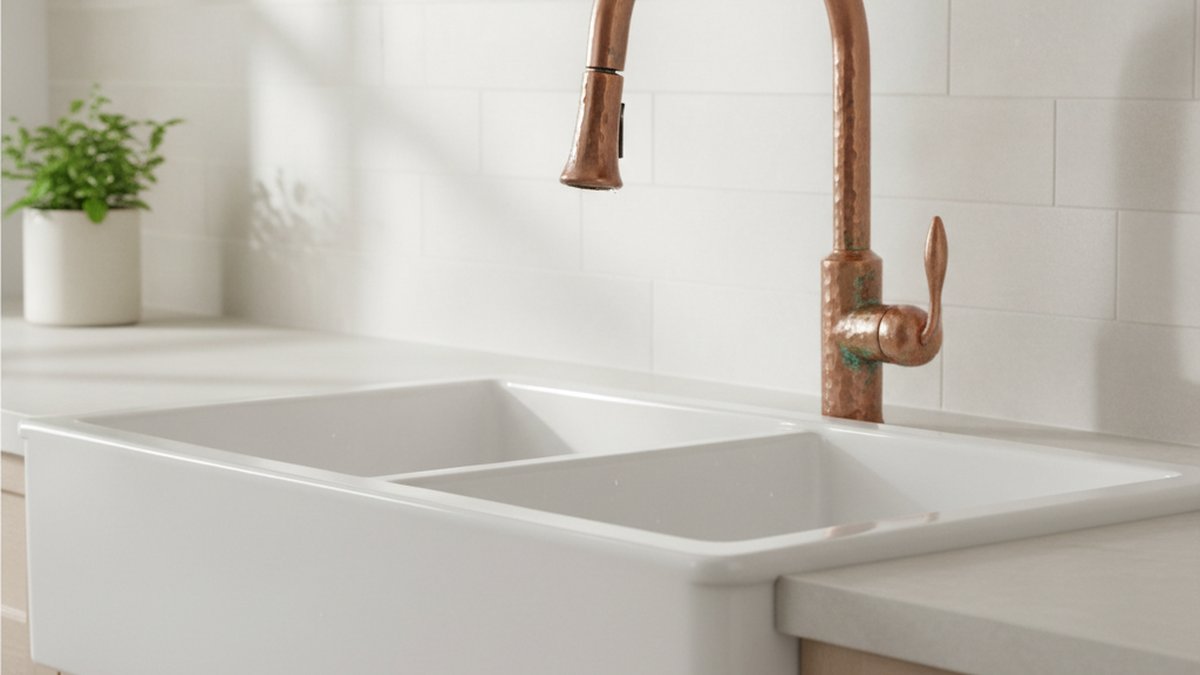
A copper faucet is one of those fixtures that instantly changes the feel of a room — it reads warm, custom, and a little vintage in a way that chrome and brushed nickel never quite manage. But “copper” covers a lot of ground: some are solid hammered copper, some are brass with a copper-colored plating, and some are stainless steel with a PVD coating that just looks like copper. The differences matter a lot for how the faucet ages, how much scrubbing it needs, and what you should pay. Let’s walk through it like a plumber and a designer talking you through it at the same time.
What exactly is a “copper faucet” — solid copper, plated brass, or PVD?
A “copper faucet” can mean three very different things, and the label on the box rarely spells it out. In plain terms: solid/hammered copper is real copper metal all the way through; copper-plated or antique-copper faucets are usually brass with a thin decorative copper layer; and PVD copper faucets are stainless or brass with a vapor-deposited coating that mimics copper. All three look copper on day one — they behave completely differently by year three.
Here’s why that distinction is the single most important thing to understand before you buy. Real copper is a “living finish,” meaning it’s meant to change color as it oxidizes — it deepens from bright penny-orange toward brown, then eventually toward a mottled brown-green patina. Some people love that; it’s the whole point of an artisan hammered copper bar faucet. Other people are horrified when their shiny faucet goes dull in six months. Plated and PVD versions are engineered to stay put, so what you see is roughly what you keep.
- Solid/hammered copper: Heavy, artisan look, naturally antimicrobial, but it’s a living finish that darkens unless sealed. Best for farmhouse and rustic kitchens.
- Antique/oil-rubbed copper over brass: Brass body (very durable, corrosion-resistant) with a hand-applied dark copper-bronze tone. A great balance of looks and toughness.
- PVD copper / rose gold: A stainless or brass base with a physical-vapor-deposited coating. Extremely scratch- and tarnish-resistant, stays bright, lowest maintenance.
Does a copper faucet turn green or change color over time?
Yes — but only if it’s a raw or unsealed “living finish” copper. Uncoated copper will oxidize: it dulls within weeks, deepens to brown over months, and can develop a green-blue verdigris patina over years, especially where water sits. Lacquered, oil-rubbed (brass-based), and PVD copper faucets are sealed and will not turn green under normal use.
If you’ve ever watched a bright kitchen fixture go dull and wondered whether you did something wrong, you’re not alone — it’s the same confusion that makes people ask why their kitchen faucet turned yellow or whether a yellow kitchen tap is a defect or a design choice. With copper it’s the same story: the color shift is chemistry, not failure. Copper reacts with oxygen, humidity, skin oils, and especially acidic foods and hard-water minerals. That reaction is what antique-copper lovers pay extra for — and what low-maintenance buyers want to avoid entirely.
The practical takeaway: decide up front whether you want an evolving finish or a stable one. If you want it to stay exactly as shipped, buy PVD or a lacquered/sealed copper and never use abrasive cleaners on it. If you want that lived-in, aged-copper character, buy raw copper and let it go — you can always wax it to slow the change.
Copper faucet finishes compared: which one should you actually buy?
For most people, a PVD copper or an oil-rubbed bronze-over-brass faucet is the smart buy — you get the warm tone with minimal upkeep. Choose true solid copper only if the aged, one-of-a-kind patina is exactly the look you want and you accept the care that comes with it. Here’s how the common options stack up.
| Finish type | Base material | Color stability | Maintenance | Best for | Typical price (kitchen) |
|---|---|---|---|---|---|
| Solid hammered copper (raw) | Solid copper | Living finish — darkens & patinas | High (wax to control patina) | Farmhouse, rustic, artisan kitchens | $220–$600+ |
| Lacquered / sealed copper | Copper or brass | Stable while coating lasts | Medium (avoid abrasives) | Bright copper look, less patina | $180–$450 |
| Antique / oil-rubbed copper | Brass | Very stable, hand-applied tone | Low–medium | Traditional & transitional baths | $150–$400 |
| PVD copper / rose gold | Stainless or brass | Excellent — won’t tarnish | Low (wipe with damp cloth) | Modern kitchens, high-use sinks | $130–$350 |
Are copper faucets good for hard water and hygiene?
Copper faucets are genuinely good on both counts. Copper is naturally antimicrobial — studies on copper surfaces show they kill many bacteria within hours, which is why copper and copper alloys (like brass) are used in high-touch settings. And copper resists corrosion well, so it handles hard water better than cheap plated finishes. The catch is cosmetic: hard-water minerals leave white spots and can accelerate patina on raw copper.
If you’re on well water or heavily mineralized municipal water, two things help a lot. First, wipe the faucet dry after heavy use — 10 seconds with a microfiber cloth prevents most spotting. Second, keep the aerator clean, because copper faucets clog with mineral scale exactly like any other faucet. If your flow has dropped to a trickle, the fix is usually the aerator, not the faucet body — here’s how to clean a clogged faucet aerator in a few minutes without tools. Underneath the finish, a good copper or brass faucet uses a ceramic-disc cartridge, and those are what actually control your water and wear out over time.
Will a copper faucet match my sink and hardware?
Copper is a warm metal, so it pairs best with other warm or neutral tones — fireclay farmhouse sinks, matte black, unlacquered brass cabinet pulls, natural stone, and butcher-block counters. It can clash with cool-toned brushed nickel or polished chrome nearby. You don’t have to match metals perfectly anymore — mixed metals are common — but keep copper in the same “temperature family” as at least one other element in the room so it looks intentional rather than accidental.
How do you clean and maintain a copper faucet so it keeps looking good?
For a sealed or PVD copper faucet, maintenance is almost nothing: wipe it with a damp soft cloth and dry it. For raw living-finish copper, the goal is to either embrace the patina or slow it with wax — never scrub it with abrasive pads or acidic cleaners unless you deliberately want to strip it back to bright. The single biggest mistake people make is using a harsh cleaner that eats the finish.
- Daily: Wipe with a soft damp microfiber cloth, then dry to prevent water spots.
- Weekly: Clean with a drop of mild dish soap and warm water. Rinse and dry.
- To brighten raw copper (only if you want it shiny): A paste of equal parts salt, flour, and white vinegar, rubbed gently, then rinsed and dried thoroughly.
- To preserve a look you like: Apply a thin coat of carnauba or beeswax paste to seal raw copper and slow further patina.
- Never: Use bleach, ammonia, oven cleaner, or abrasive scouring pads on any copper or coated finish.
What about installation — is a copper faucet any harder to install?
No — a copper faucet installs exactly like any other faucet of the same configuration. The finish has nothing to do with mounting. What matters is the deck/mounting setup, the number of holes in your sink, and the supply-line connections. A single-hole copper bar faucet drops in like any single-hole faucet; a widespread copper bathroom set installs like any three-piece widespread. If you’re comfortable with a basin wrench and shutting off the supply valves, most homeowners handle it in under an hour. If you’re new to it, the process is nearly identical to a standard pull-down install — the same steps as this Glacier Bay kitchen faucet installation walkthrough apply to a copper model in the same mounting style.
Copper faucet vs brushed nickel vs matte black: which lasts and looks best?
If you want warmth and character, copper wins on looks; if you want the absolute lowest-maintenance, “disappears into the background” finish, brushed nickel or matte black is easier. Brushed nickel hides water spots and fingerprints best; matte black is dramatic but shows limescale in hard water; copper is the most distinctive but asks for a little more attention (or a PVD coating to avoid that). Durability is comparable when all three are PVD-coated over brass or stainless.
One more angle worth naming: resale and timelessness. Chrome and brushed nickel are the “safe” neutrals that appeal to the widest set of buyers. Copper is a statement — it’s fantastic if it fits your style, but it’s more of a personal choice than a crowd-pleaser. If you love the aged, characterful look, copper sits right alongside other warm vintage looks; if you’re drawn to that direction generally, it’s worth reading how to choose a vintage kitchen faucet that actually works, since a lot of copper faucets lean vintage in styling and the same buying logic applies.
How much should you spend on a copper faucet, and what do you get at each price?
Plan on roughly $130–$350 for a solid, well-built PVD or oil-rubbed copper faucet from a reputable brand, and $220–$600+ for artisan solid/hammered copper. Below about $120, you’re usually getting a thin copper-colored plating over zinc or pot metal that chips and corrodes — those are the ones that disappoint. Spend for a brass or stainless body first; the finish is secondary.
What actually drives the price and the lifespan:
- Body material: Solid brass or stainless lasts decades; zinc/pot metal fails early. This matters more than the finish name.
- Cartridge: A ceramic-disc cartridge is the difference between a drip-free faucet and a callback. Look for it explicitly.
- Finish process: PVD and hand-applied living finishes cost more but hold up; cheap electroplating flakes.
- Warranty: A lifetime finish-and-function warranty signals the maker trusts the build.
Author note, brand credibility & standards
About the author: This guide was written by the Cobbe fixtures team — the same people who spec, test, and support the faucets we sell every day. We’ve installed and pressure-cycled hundreds of kitchen and bath faucets across finishes, so the advice here comes from hands-on experience, not a spec sheet.
Why trust Cobbe: Cobbe (cobbe.net) designs and sells faucets and bathroom fixtures built on solid-brass bodies and ceramic-disc cartridges. Our finishes are tested against standard tarnish, salt-spray, and abrasion checks aligned with the kind of durability requirements in ASME A112.18.1/CSA B125.1 faucet standards, and our fixtures are backed by a limited lifetime warranty on finish and function. If a finish fails under normal use, that’s on us to make right — which is exactly why we steer buyers toward PVD or brass-bodied copper rather than cheap plated pot metal.
FAQ
Do copper faucets tarnish?
Raw, unsealed copper will tarnish and patina — that’s the intended “living finish.” Lacquered, oil-rubbed brass-based, and PVD copper faucets are sealed and resist tarnishing under normal household use. If you want it to stay bright, buy a coated version and skip abrasive cleaners.
Are copper faucets more sanitary than chrome or stainless?
Copper and copper alloys like brass are naturally antimicrobial — copper surfaces kill many bacteria over time, which is why they’re used on high-touch fixtures. Chrome and stainless are inert and easy to clean but don’t have that inherent antimicrobial property. In practice, either is hygienic if you clean it; copper just adds a small bonus.
Will a copper faucet turn my water or fixtures green?
No, not under normal conditions. The green verdigris you sometimes see is surface oxidation on raw copper, not something leaching into your water. Sealed and PVD copper faucets won’t develop it at all. If you ever see blue-green staining in a sink, it’s usually from very acidic water reacting with copper pipes, which is a plumbing/water-quality issue, not the faucet finish.
Is a solid copper faucet worth the extra money over a copper finish?
Only if you specifically want the artisan, hammered, evolving-patina look. Solid copper is heavier and one-of-a-kind but needs more care and darkens over time. For most kitchens and bathrooms, a brass-bodied faucet with a PVD or oil-rubbed copper finish gives you the look, better color stability, and lower maintenance for less money.
How do I stop water spots on my copper faucet?
Wipe it dry with a soft microfiber cloth after heavy use — that prevents almost all hard-water spotting. For existing spots, clean with mild dish soap and water, rinse, and dry. On raw copper you can apply a thin wax coat to make future spots easier to wipe away. Never use acidic or abrasive cleaners on a coated finish.
Can I put a copper faucet on any sink?
Yes, as long as the mounting configuration matches — check the number of faucet holes and their spacing (single-hole, centerset, or widespread) and confirm the deck thickness fits the faucet’s threaded shank. The copper finish itself imposes no special requirements; installation is identical to any faucet of the same type.