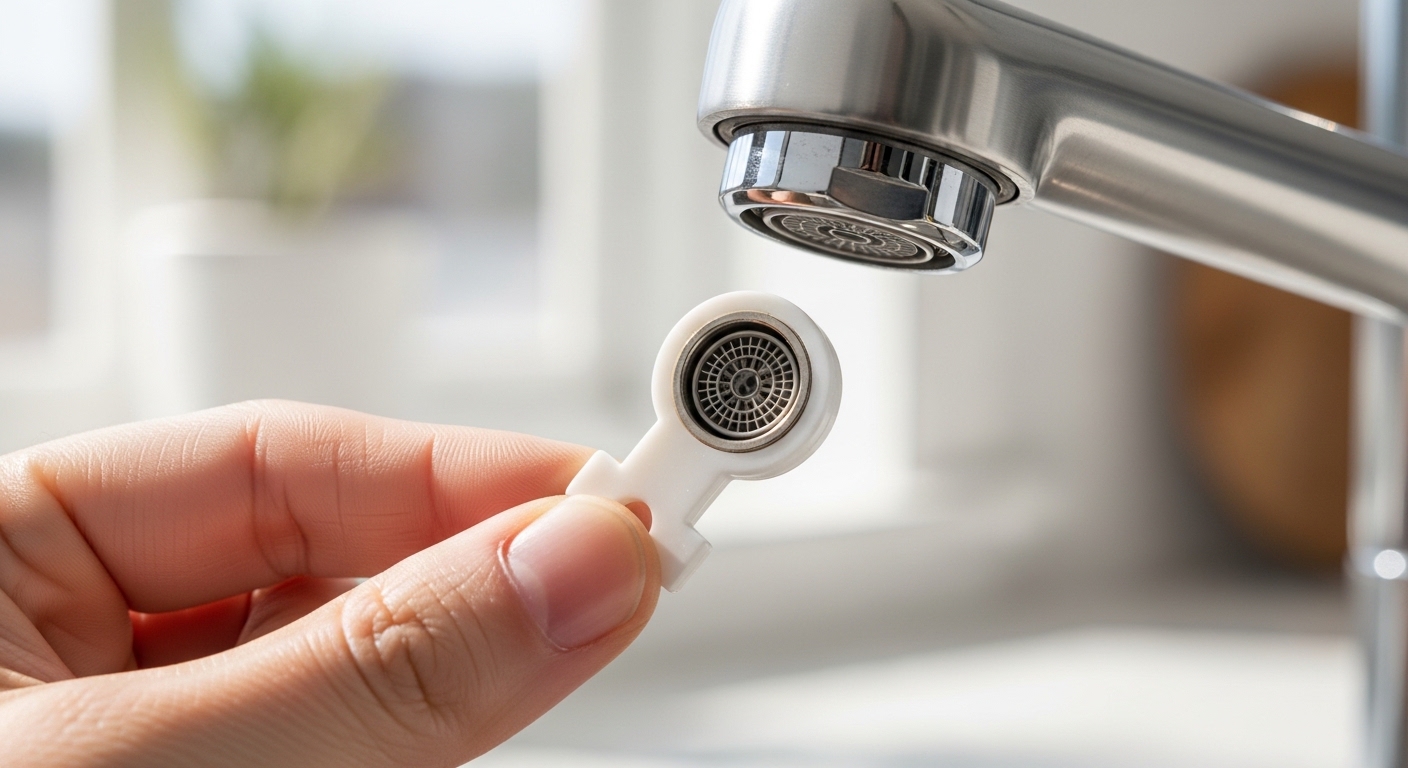
The term kitchen faucet key confuses a lot of people because it isn’t a single standardized tool — it’s a category of small keys and wrenches that faucet makers include (or sell separately) to service parts that regular pliers can’t grip without chewing up the chrome. In this guide we’ll explain exactly what a kitchen faucet key does, the different types you’ll run into, how to tell which one your faucet needs, and how to replace a lost one — with real sizes, materials, and scenarios so you buy the right thing the first time.
What exactly is a kitchen faucet key used for?
A kitchen faucet key is used to grip and turn a faucet part that has no exposed flats for a normal wrench — most often a recessed aerator, but sometimes a mounting nut or a decorative cap. The key has teeth, notches, or a shaped collar that mate precisely with the part so you can turn it without slipping or scratching.
Here’s why that matters. On older faucets, the aerator (the screen at the tip of the spout that mixes air into the water) screwed on with a knurled or hex-shaped outer ring you could grab with your fingers or channel-lock pliers. Modern faucets — especially sleek pull-down and pull-out designs — hide the aerator inside the spout tip so nothing sticks out. That flush, smooth look is great for cleaning but impossible to unscrew by hand. The manufacturer’s answer is a small keyed tool that drops into the aerator’s notches and lets you spin it out.
You’ll typically reach for a faucet key in three situations:
- Cleaning or descaling the aerator — the most common reason. Mineral buildup slows your flow to a trickle, and you need to pull the aerator to soak it.
- Installing the faucet — some models ship with a key that also serves as the tool for the base mounting nut under the sink.
- Servicing the handle or cartridge — a hex/Allen-style key loosens the set screw that holds the lever handle on.
Which type of kitchen faucet key do I actually have?
Most kitchen faucet keys fall into one of four types, and identifying yours takes about ten seconds once you know what to look at. Look at the tip of your spout and at the base of your handle, then match what you see to the table below.
| Key type | What it services | How to recognize it | Typical material |
|---|---|---|---|
| Cache aerator key | Recessed/flush aerator inside the spout tip | Small ring or cap with inner teeth that match notches around the aerator | Molded plastic (sometimes brass) |
| Standard aerator wrench | Exposed aerator with flat sides | Slim double-ended wrench with a keyed opening | Plastic or zinc alloy |
| Allen / hex key | Handle set screw | L-shaped or short hex key, often 2.5mm or 3mm | Hardened steel |
| Mounting / basin key | Nut under the sink deck | Longer plastic tool with a collar that fits the quick-connect nut | Reinforced plastic |
The one that trips people up most is the cache aerator key. Every brand shapes its notches a little differently — the number of teeth and the outer diameter vary — so a Moen key won’t always fit a Delta, and a Cobbe key is sized to Cobbe spouts. That’s why “just buy any faucet key” is bad advice; you want the one matched to your brand and model, or a universal multi-size set that includes several profiles.
How do I use a kitchen faucet key to remove a clogged aerator?
To remove a recessed aerator, drop the key into the notches at the spout tip, turn it counterclockwise (lefty-loosey) until the aerator threads free, then pull it straight out. The whole job takes under two minutes once the key is seated correctly. Here’s the full sequence:
- Turn off the faucet and lay a rag over the drain so no small parts disappear down it.
- Seat the key. Push the keyed end firmly and squarely into the aerator so all the teeth engage. If it’s cocked at an angle, it’ll slip and round off the notches.
- Turn counterclockwise. Aerators are only hand-tight plus a nudge, so it should break loose with light pressure. If it’s stuck from mineral crust, don’t force it — see the descaling tip below.
- Lift out the aerator and its rubber washer. Note the order the parts come out; they go back in the same way.
- Soak in white vinegar for 20–30 minutes to dissolve limescale, scrub the screen with an old toothbrush, and rinse.
- Reinstall by hand, then snug it with the key — about a quarter turn past hand-tight. Overtightening cracks plastic threads.
If the aerator is welded in place by hard-water scale, wrap a vinegar-soaked paper towel around the spout tip for 15 minutes first, then try the key again. This is the exact same buildup that dulls your finish, and our full walkthrough on how to clean hard water stains from a faucet covers the soak-and-scrub method in more detail. A clogged aerator is also one of the sneakiest causes of a faucet that seems to “drip” or spray oddly after you shut it off — if that’s your symptom, our guide on why a kitchen faucet drips and how to stop it fast is worth a read before you assume the cartridge is bad.
I lost my kitchen faucet key — where do I get a replacement?
If you lost the key, you have three good options: order the exact replacement from your faucet brand, buy a universal cache-aerator key set that includes multiple tooth profiles, or measure the aerator and match it to an aftermarket key. For most people the universal multi-key set is the smart buy because it covers several brands for the price of one OEM tool.
Before you order anything, do this: take a clear photo of the spout tip straight-on and count the notches, then measure the inside diameter of the aerator opening with a caliper or a ruler in millimeters. Cache aerators commonly run in a handful of standard sizes (roughly 16mm to 24mm across the key face), and matching that diameter plus the notch count gets you the right key almost every time. When in doubt, contact the brand with your faucet’s model number — a Cobbe support rep can tell you the exact key part in one message rather than you guessing.
A few practical notes on replacements:
- Keep the spare. When your new key arrives, tape it inside the sink cabinet or the faucet’s original box. It’s the single easiest part to lose.
- Plastic vs. brass. Plastic keys are fine for occasional aerator cleaning; brass or zinc keys last longer if you service the faucet often or the aerator tends to seize.
- Don’t substitute pliers. Gripping a recessed aerator with pliers almost always scratches the spout and can crack the aerator housing — a $10 tool is cheaper than a scuffed faucet.
Does every kitchen faucet come with a key, and do I need one for a new install?
Not every faucet includes a key, but any faucet with a hidden/recessed aerator should — and yes, you’ll likely need it during installation and for the life of the faucet. Budget and older-style faucets with exposed aerators often skip the key entirely because you can hand-tighten those. Premium pull-down and touchless models almost always include a cache aerator key in the box, sometimes clipped to the supply lines or tucked in the mounting-hardware bag.
During a new install, the key matters in two ways. First, some brands use the same tool to seat the quick-connect mounting nut under the deck, so losing it before install day is a headache. Second, you’ll want it on hand from day one because the first aerator clean usually comes within the first year in hard-water homes. If you’re putting in a faucet yourself, keep the key with your other tools and read through our step-by-step guide on how to install a kitchen faucet so you don’t set the key aside and lose it mid-project. And if you ever face a persistent drip after install, our home fix guide on how to fix a dripping faucet at home walks through the cartridge and aerator checks in order.
How do I keep from needing the key so often?
The best way to avoid constant aerator removal is to slow down the mineral buildup that clogs it in the first place. If you’re pulling the aerator every few weeks, the real problem is water hardness, not the faucet. A few habits cut the frequency dramatically:
- Wipe the spout tip dry after heavy use so scale doesn’t crust the aerator face.
- Do a monthly vinegar soak on the aerator instead of waiting for flow to drop — five minutes now beats a seized aerator later.
- Consider a whole-home or under-sink softener if you’re on very hard water (over ~10 grains per gallon); it protects the entire faucet, not just the screen.
- Choose a faucet with a rubber-nub aerator — the kind you can wipe scale off with a fingertip. Cobbe uses these on several pull-down models specifically to reduce how often you need the key.
Keeping the aerator clean also protects your flow rate and spray pattern, which is half of what makes a good kitchen faucet feel “good” day to day.
Quick buyer’s cheat sheet: choosing a replacement key or a key-friendly faucet
If you’re shopping right now, here’s the short version: match the key to your brand and aerator diameter, favor a multi-size set if you own faucets from different brands, and if you’re buying a whole new faucet, pick one with an easy-service aerator so the key is a rare visitor rather than a weekly tool.
| Your situation | Best pick | Rough cost |
|---|---|---|
| Lost the OEM key, one faucet | Brand-matched replacement key by model number | $3–$10 |
| Multiple faucets, different brands | Universal cache aerator key set | $8–$15 |
| Handle is loose | Correct hex/Allen key (2.5–3mm typical) | $2–$6 |
| Buying a new faucet | Model with wipe-clean rubber aerator + included key | Included |
A note on quality, standards, and why the right key matters
It’s tempting to treat the faucet key as a throwaway, but it’s part of a system that’s engineered to tolerances. Reputable kitchen faucets — Cobbe’s included — are built to plumbing standards like NSF/ANSI 61 and NSF/ANSI 372 for drinking-water safety and lead-free content, and their aerators are calibrated to hit flow rates around 1.5–1.8 GPM. Forcing a mismatched tool or over-torquing the aerator can crack the housing, distort the flow, or damage the lead-free brass threads the standard is protecting. Using the correct key preserves both the finish and the certification-backed performance you paid for. Cobbe faucets are pressure-tested and finish-tested before shipping, and are backed by a limited lifetime warranty on the faucet body and finish — using the proper key for routine service keeps that warranty intact rather than voiding it with tool damage.
FAQ
Is a kitchen faucet key the same as an aerator key?
Usually, yes. When people say “kitchen faucet key” they most often mean the cache aerator key used to remove a recessed aerator. But the term can also cover the hex key for a handle set screw or the basin key for the under-sink mounting nut, so check which part you’re trying to service before you buy.
Can I remove a recessed aerator without the key?
Sometimes, but it’s risky. You can try a strip of rubber shelf liner for grip, or gentle pliers padded with a cloth, but recessed aerators are designed to be flush precisely so they resist that. You’ll likely scratch the spout or crack the aerator. A matched key is cheap enough that it’s not worth gambling on the finish.
Are all kitchen faucet keys universal?
No. Cache aerator keys vary by tooth count and diameter between brands and even between models from the same brand. A universal multi-key set works because it includes several profiles in one package — but a single OEM key from one brand won’t reliably fit another. Measure your aerator’s diameter and count the notches before ordering.
What size hex key loosens a kitchen faucet handle?
Most lever-handle set screws take a 2.5mm or 3mm hex (Allen) key, though some older or imported faucets use 1/8-inch. If your faucet came with a small L-shaped key in the box, that’s the one. If it’s lost, a basic metric hex set from any hardware store will have the size you need.
Where should I store my faucet key so I don’t lose it?
Tape it to the inside wall of the sink base cabinet, drop it in a labeled zip bag with your other faucet parts, or keep it in the original box with the manual. The key is small and easy to misplace, so giving it a permanent home near the sink means it’s there the day your aerator finally clogs.
My aerator is stuck even with the key — what now?
Mineral scale is almost always the culprit. Wrap the spout tip in a vinegar-soaked paper towel for 15–20 minutes to dissolve the buildup, then reseat the key and try again with steady, not forceful, pressure. If it still won’t budge, avoid cranking harder — you can shear the threads. Applying penetrating heat from warm (not boiling) water can also help expand the metal enough to break it loose.
Author note: This guide was written by the Cobbe product team, who design, pressure-test, and finish-test kitchen and bathroom faucets and field real customer service questions about aerators, cartridges, and replacement parts every week. Cobbe manufactures faucets to NSF/ANSI lead-free and drinking-water standards and backs them with a limited lifetime warranty. If you’re unsure which key your Cobbe faucet needs, send us your model number and a photo of the spout tip and we’ll identify the exact part.